
Architects of Live Experience: In Conversation with Warren D'Souza
From world-class productions to the future of audio technology, Warren D'souza reflects on three decades of shaping the sound of live entertainment.
You’ve spent over three decades shaping the sound of live entertainment in India. What were the early moments that shaped your approach to live sound, and how did they eventually lead to building SOUND.COM?
SOUND.COM actually began from an internal struggle rather than a business ambition. I never set out to build an audio rental company. The reality was that I couldn’t find an employer in the live sound industry in India whose vision and values aligned with mine. Eventually, I realised that if my future was going to depend on anyone, it had to depend on me.
After graduating in Electronics Engineering in 1992, I started working in my father’s rental business. From there, I worked as an Assistant Recording Engineer at Digital Domain Studios in Mumbai, then as an Assistant Plant Engineer at a cassette manufacturing plant. I later moved into the mastering department, but it quickly became clear that cassette manufacturing was a sunset industry with CDs already taking over.
I then moved into film sound recording, where I learnt a great deal about professional audio. Since I didn’t have the capital to start an audio rental company, I founded a loudspeaker manufacturing business called Mach 1 Audio. After two and a half years of building loudspeakers, I made a decision that changed everything. I converted my manufacturing inventory into rental stock, and that became the foundation of SOUND.COM.
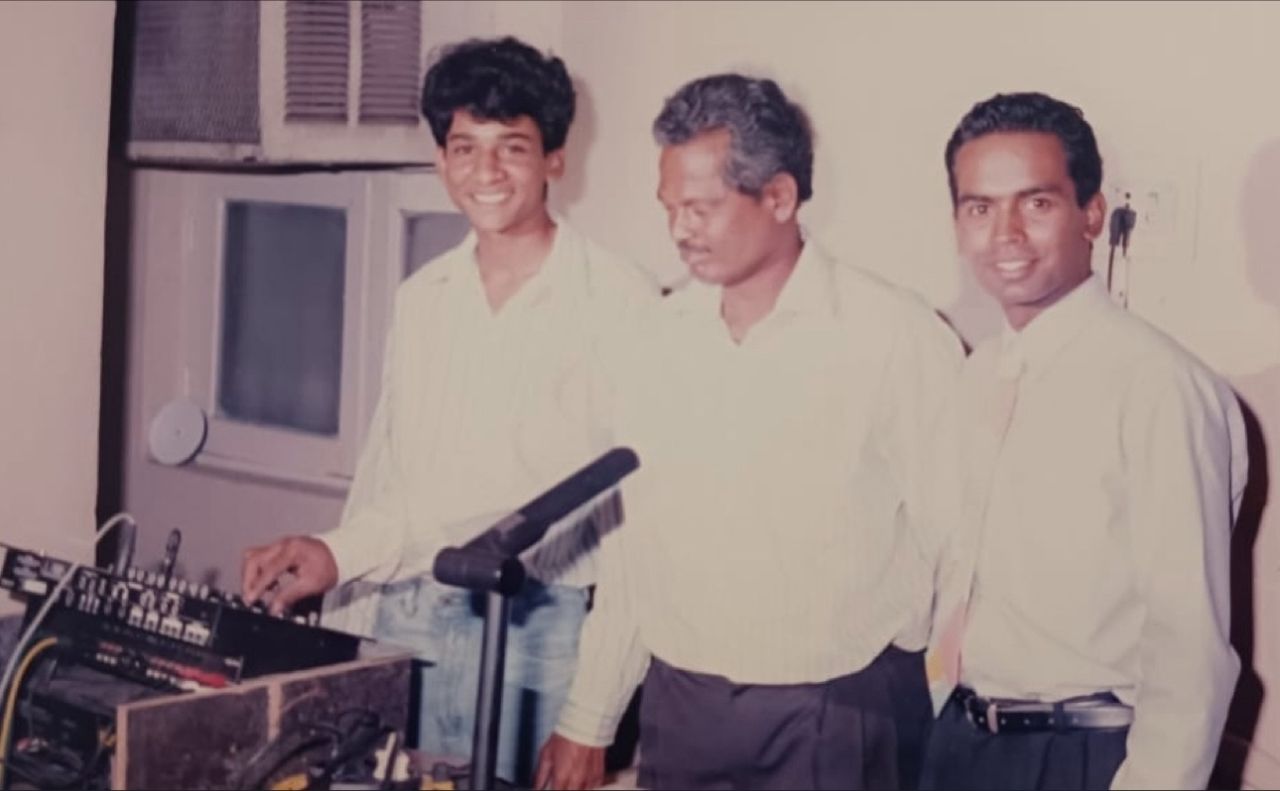
Circa 1998
SOUND.COM emerged at a time when India’s large-scale live entertainment ecosystem was still taking shape. What gaps did you see in the industry then, and what vision drove you to build the company?
At the time, most companies were simply supplying equipment. Very few were providing a true service. One of the biggest things we brought into the industry was the mindset of being a service provider rather than just an equipment supplier, especially for event managers who were building brands through events.
Another gap was in the corporate events space. There wasn’t really a structured approach to providing professional audio services for hotel ballrooms and mid-sized conferences that transformed into entertainment events by evening. We focused heavily on making those productions seamless and dependable.
As we expanded into concerts, another challenge became obvious. India simply didn’t have the quality musical instruments required to satisfy international technical riders. Visiting artists often struggled to source the equipment they needed, so we gradually built one of the country’s largest inventories of professional backline equipment to support international touring artists.
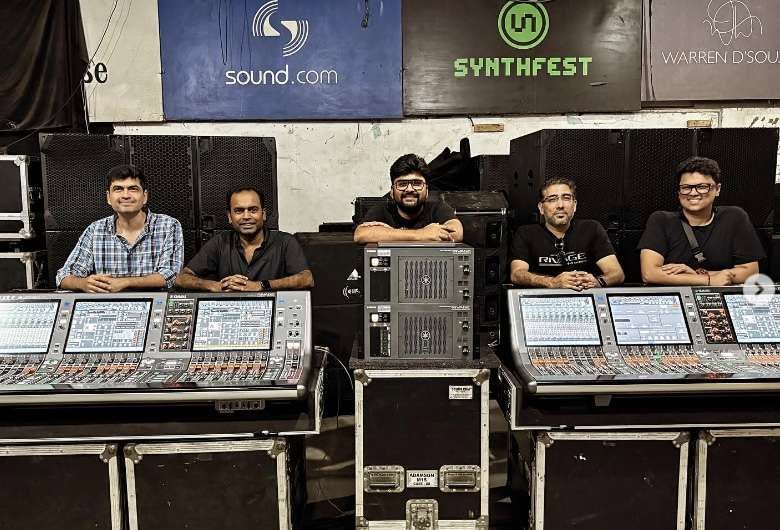
From the Commonwealth Games and IPL Opening Ceremonies to large-format concerts and festivals, your systems have supported productions at an extraordinary scale. What does “designing for reliability” truly mean in environments where there is no room for failure?
I think people often underestimate what it takes to design truly reliable systems. Reliability isn’t achieved by doing one or two things well—it comes from designing every part of the system holistically.
Building reliable large-scale audio and turnkey production systems requires significant planning, investment, experience, and discipline. As an organisation, we never tried to make giant leaps. We improved reliability in small steps, every single day. By the time we were entrusted with major international productions, the systems and processes were already in place.
Every large event became a learning opportunity that allowed us to improve further. A major turning point was the 2010 Commonwealth Games, where we won a joint tender with the Australian company Norwest. Working alongside them taught us a tremendous amount about designing, integrating, and delivering turnkey sound systems for complex, large-scale events.
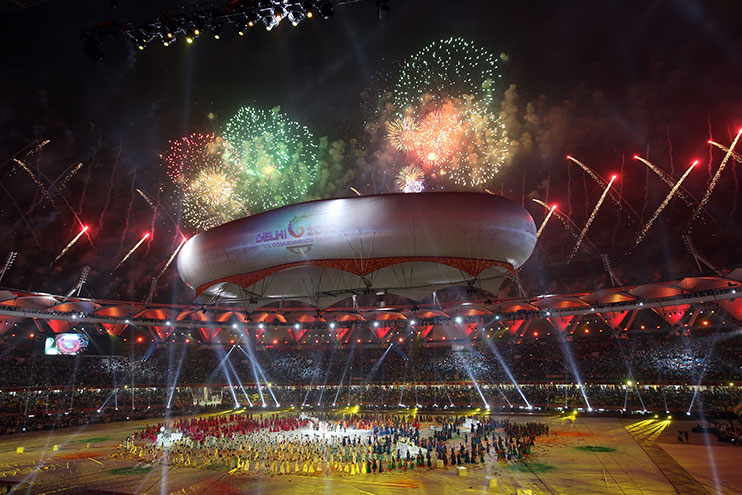
Commonwealth Games 2010
SOUND.COM has consistently been at the forefront of adopting new technologies, from advanced networking solutions to becoming India’s first L-Acoustics L2 rental partner. What drives your decisions when investing in new audio technology?
In this business, innovation is what keeps you relevant. But innovation alone isn’t enough, it has to be backed by reliable service.
Every investment we make is evaluated on whether it genuinely improves performance, reliability, efficiency, or the client experience. As long as you continue innovating while maintaining consistently high service standards, you’re moving in the right direction. The moment you stop doing either, you begin to lose your direction as a company.
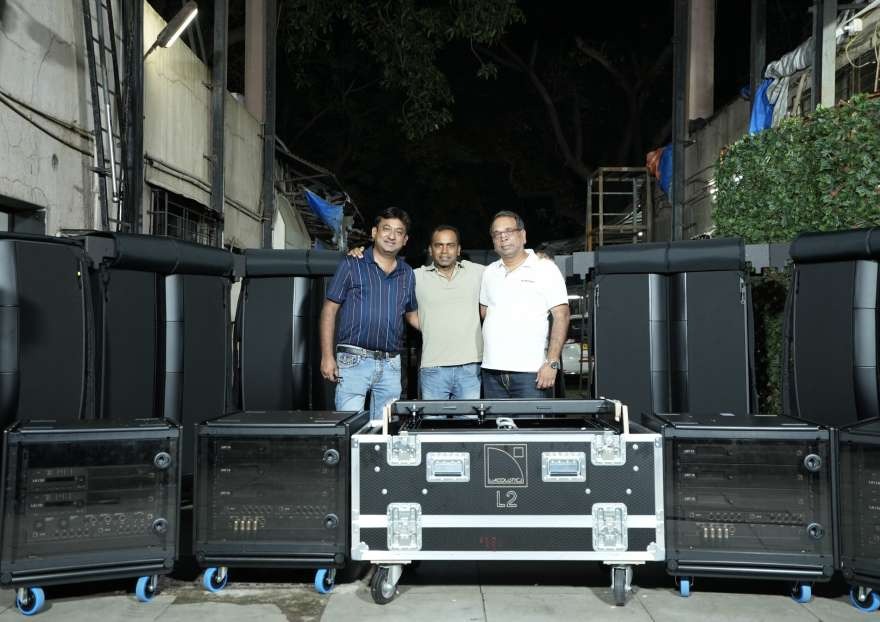
SOUND.COM Makes History as India’s First L-Acoustics L2 Rental Partner
Having delivered audio for artists ranging from Ed Sheeran, Justin Bieber, Sting, Diljit Dosanjh, Arijit Singh and AR Rahman to some of the world’s biggest electronic music festivals, how does your approach differ when designing sound for an individual artist versus designing sound for an entire event ecosystem?
When you’re designing audio for a tour, your entire focus is on one artist. Your primary responsibility is ensuring that the artist’s creative vision is translated sonically to every audience, every night.
The second challenge is efficiency. Touring productions are expensive, so systems have to be designed for consistency, reliability, and speed. The third challenge is leapfrogging the tour. You might have a show in Chandigarh on Friday night and another in Bengaluru on Saturday and another gig on Sunday in Kolkata. Since the equipment cannot physically travel that quickly, you need duplicate systems, additional crew, logistics, and trucking so both productions can operate simultaneously.
Festivals are very different. You’re supporting multiple artists with completely different technical requirements, while managing extremely fast changeovers. Festivals operate with military precision—there’s virtually no room for delays.
The system also needs to accommodate every musical genre imaginable, so it has to remain as neutral and transparent as possible, allowing each engineer to create the sound their artist wants rather than imposing a sonic character of its own.
When you walk into a venue, what are the first indicators that tell you an audience is experiencing sound exactly the way it was intended?
When people are enjoying the music instead of listening to the loudspeakers, you’ve achieved great sound.
Having worked across concerts, festivals, sporting events, ceremonies and televised productions, what are some lessons about live sound that have remained true regardless of the scale or format?
The biggest lesson is simple, you don’t get a second chance.
Through initiatives such as EvenTech Academy, you have also contributed to developing technical talent within the industry. Do you believe India currently has enough skilled professionals to support the rapid growth of live entertainment, and where do the biggest opportunities lie?
India certainly has no shortage of people. In fact, very few countries have the talent pool that India and China possess. The challenge isn’t finding people, it’s training, mentoring, and upskilling them.
The biggest opportunities over the next decade lie in specialist disciplines such as trussing and rigging, systems engineering, RF engineering, networking, automation, and show control. As productions become more sophisticated, demand for highly specialised technical professionals will continue to grow.
Beyond the technology itself, live audio is also a business built on logistics, people, planning, and risk management. What is the most underestimated challenge in running a large-scale audio production company?
The most underestimated challenge isn’t technology; it’s people. Building a team where everyone works cohesively towards a common goal is by far the biggest challenge in running any large production company.
With India’s touring market scaling rapidly and production standards rising year after year, what innovations or shifts do you believe will define the next decade of live sound?
Artificial intelligence will have a significant impact on our industry, particularly in system optimisation, workflow automation, and operational efficiency.
I also believe we’ll continue to see rapid advancement in ultra-dense line array technology, networking, automation, and immersive audio. These technologies will fundamentally reshape how live sound systems are designed, deployed, and experienced over the next decade.
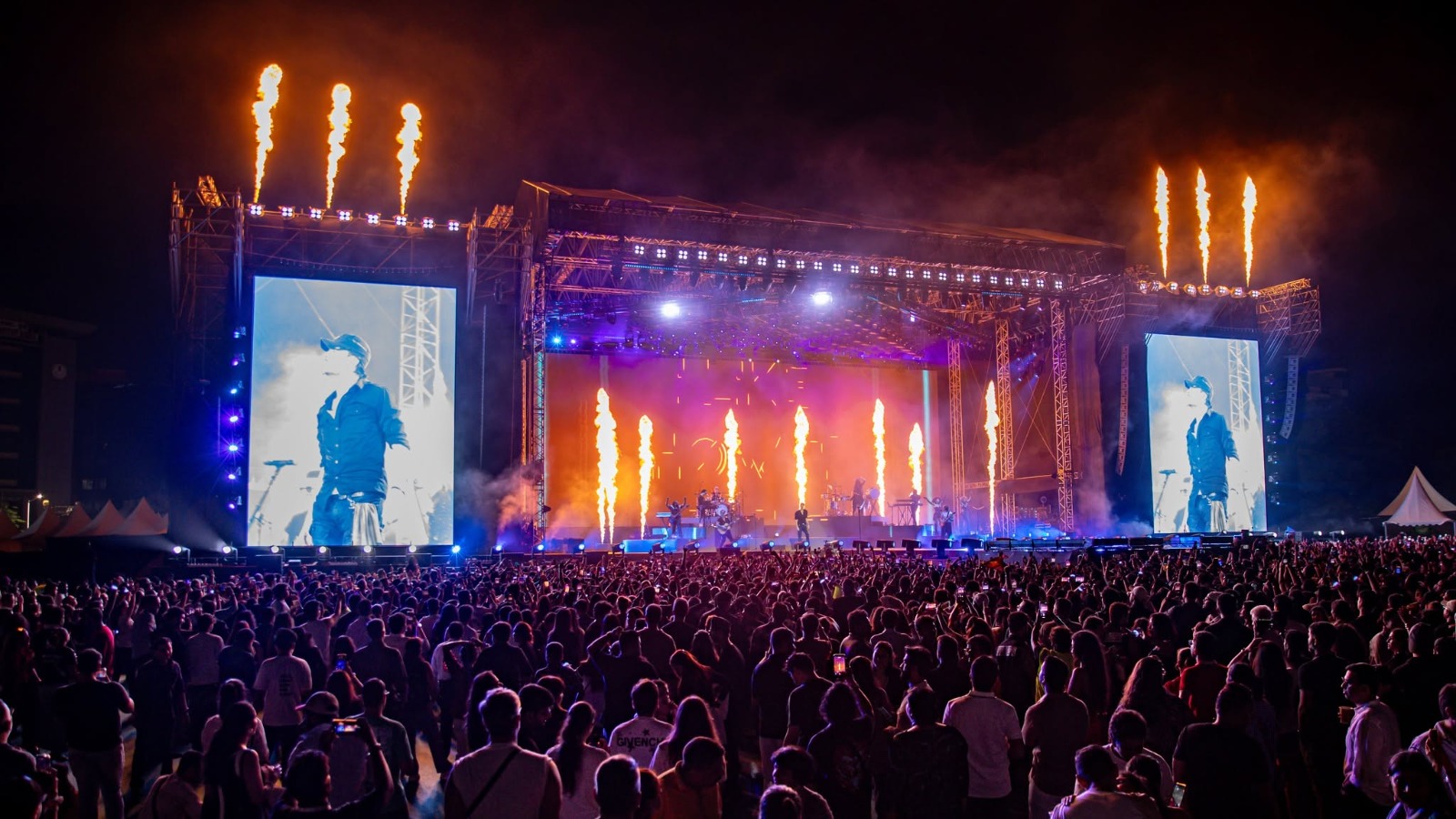
Enrique Iglesias
Photo: RVR16
What does a perfect live experience sound like to you?
A perfect live experience is about far more than just great sound.
It starts with arriving at a venue effortlessly, getting in without long queues, finding clean facilities, having access to food and beverages without frustration, and enjoying good infrastructure throughout the event.
From a technical standpoint, our industry has made tremendous progress. The bigger challenge now lies in venue infrastructure and the availability of world-class performance spaces. Great sound is only one part of a truly memorable live experience. Everything surrounding it matters just as much.
Loading comments...

THE ANALOG REVIVAL: WHY TAPE LOOPS ARE DOMINATING THE UNDERGROUND
