
All About Music X: Key Highlights and Takeaways from the Landmark 10th Edition
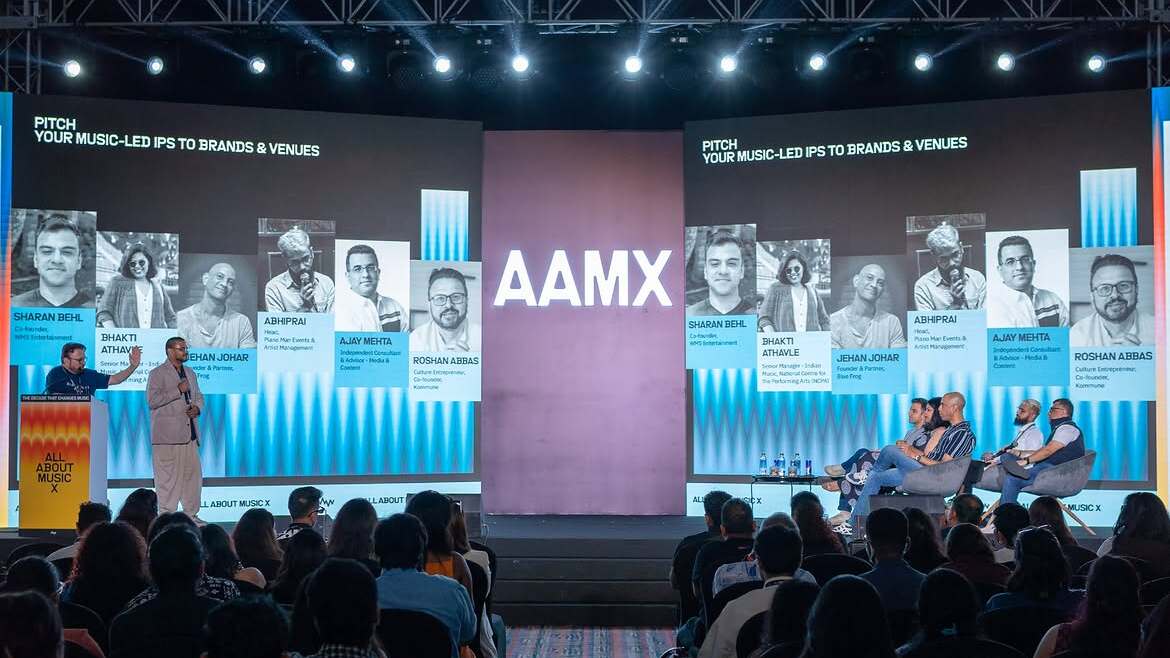
Photo: All About Music X
Across three days at Grand Hyatt Mumbai, the 10th edition of All About Music brought together the people shaping India’s music ecosystem to reflect on how the industry has evolved, where it stands today and what lies ahead.
From August 25 to 27, Grand Hyatt Mumbai became a meeting point for artists, music executives, managers, labels, publishers, technology companies, creators and live entertainment professionals. But as All About Music marked its 10th edition, AAM X felt less like a celebration of a milestone and more like a conversation about what the next decade of Indian music could look like.
The opening set the tone. Tarsame Mittal, founder of TM Talent Management and creator of All About Music, welcomed delegates by asking what has changed, what has remained the same and what needs to be rethought as the industry moves into its next chapter. Across the programme, those questions kept returning in different forms.
The Indian music business is no longer defined simply by songs and releases. A keynote by Saregama Managing Director Vikram Mehra explored paid streaming, IP ownership, capital, AI, consolidation, licensing and new revenue models, while YouTube Music APAC Managing Director Paul Smith looked at how fandom, innovation and partnerships are shaping the future of the industry.
That broader view continued through conversations on consumption, distribution and artist-first careers. Luminate's Adrian Sarosi examined changing listening and discovery patterns in India, while Spotify India's Dhruvank Vaidya explored the rise of artist-first music and the growing influence of independent artists.
At the heart of many of these discussions was the changing journey of the artist. AAM X created multiple spaces for artists to move beyond simply performing or releasing music and start thinking about how careers are actually built. Pitch sessions brought emerging artists into direct conversations with labels, A&Rs, music supervisors, managers and promoters, while Connect Corner encouraged delegates to turn networking into actual meetings, with 15-minute slots designed to put the right people in the same room.
The global opportunity was matched by a more practical examination of what it takes to get there. The economics of international touring, the India-Australia music opportunity and the Japanese music market all brought the conversation back to infrastructure, rights, relationships and sustainable access to international markets.
That ambition extended beyond India. Conversations around international touring, global A&R and electronic music looked at how Indian artists can move into new territories and build careers that travel. Michael Montante of William Morris Endeavor joined Ashish Jose for a discussion on building artists without borders, while Pete Tong, Alex Tripi, Nello Greco and Garry Blackburn explored how India can create a stronger pipeline for the next generation of electronic talent.
Meanwhile, the business of live entertainment received a significant place on the agenda. With India's concert and festival ecosystem expanding rapidly, discussions around venues, infrastructure, operations, ticketing and production examined what needs to happen behind the scenes to support that growth. Leaders from Team Innovation, Dome Entertainment and Nesco Events explored the future of live venues, while a separate conversation featuring Roydon Bangera, Vincent Samuel, Warren D Souza and Brij Gosai examined the wider business of live.
Pollstar's Brij Gosai also brought live market data into the conversation, while BookMyShow's Naman Pugalia looked at how ticketing is evolving alongside India's growing live entertainment culture.
A surprise appearance by Zakir Khan alongside Tarsameas a distant possibility but as something already reshaping music teams and the wider ecosystem. Dedicated sessions examined AI tools for artists, questions of ownership and transparency, and the role of AI and cloud infrastructure in the future of music. Voices from OpenAI, Google Cloud, YouTube, Soundverse and the music industry considered how technology could influence creation, communication, production and scale.
At the same time, AAM X made room for some of the industry's less visible but increasingly important foundations. Conversations around music publishing, licensing, performers' royalties, YouTube copyright and metadata highlighted the systems that determine how creators are credited, protected and paid.
The conference also looked at where music intersects with the wider culture around it. Discussions ranged from music-led IPs for brands and venues to sync opportunities, music supervision and the rise of bhajan clubbing among Gen Z. At the other end of the spectrum, sessions around India's musical heritage and the work of Ayaan and Amaan Ali Bangash explored how traditional sounds can find new audiences and travel globally. Even vinyl found a place in the conversation, with a session on its renewed relevance and the possibilities of making physical music in India.
And through it all, the artists remained at the centre. Ritviz, Badshah, Jasleen Royal, Rashmeet Kaur, Parmish Verma, Raja Kumari, Shilpa Rao and Usha Uthup were among the artists who brought their own experiences of creativity, identity, career-building and change into the room. A surprise appearance by Zakir Khan alongside Tarsame Mittal added an unexpected moment of music, stories and laughter to the 10th anniversary edition.
After a decade, the most interesting thing about All About Music may be that the conversation has become harder to define. Music now lives across streaming platforms, live venues, creator communities, podcasts, films, brands, cars, technology and global markets. Artists are increasingly building businesses around themselves, audiences are discovering music in new ways, and technology is changing almost every stage of the journey.
The 10th edition was therefore not simply a look at where the industry has been. It was a snapshot of where it stands now, and a reminder that the next decade will be shaped by the people willing to question the old routes and build new ones. Ten years of conversations brought the industry here. The next ten may determine where it goes.
Loading comments...

THE ANALOG REVIVAL: WHY TAPE LOOPS ARE DOMINATING THE UNDERGROUND
